








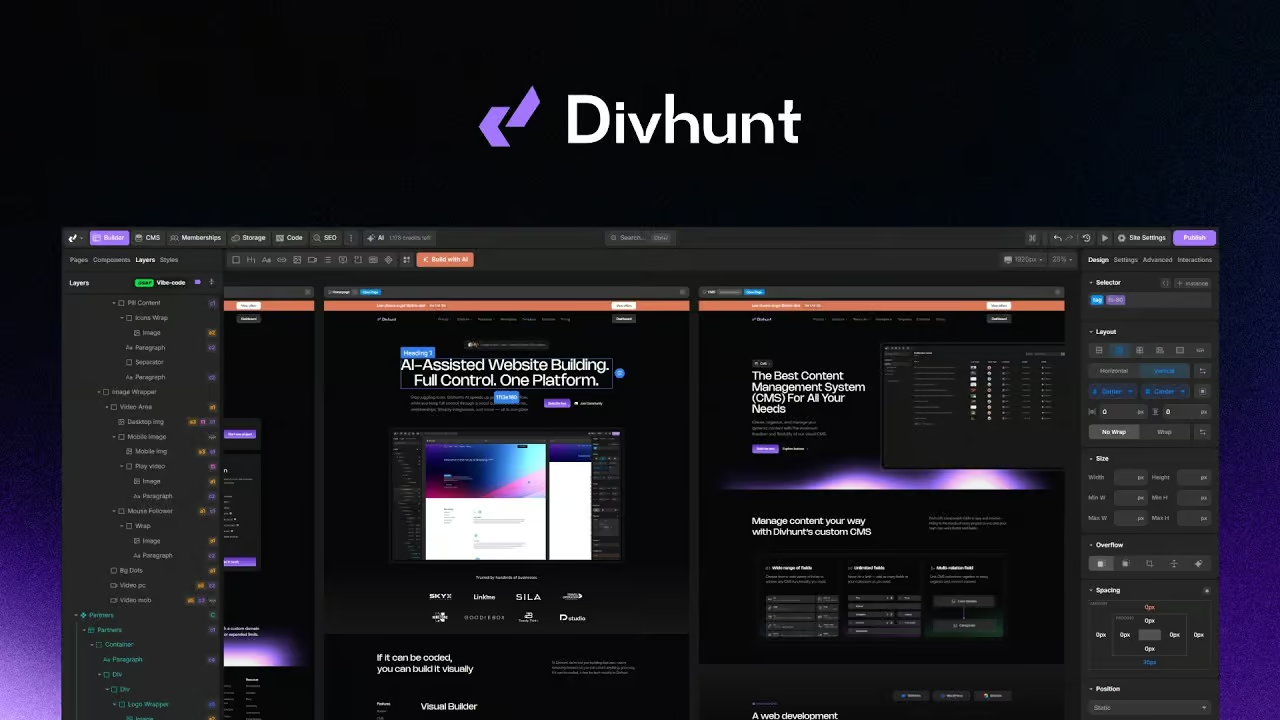

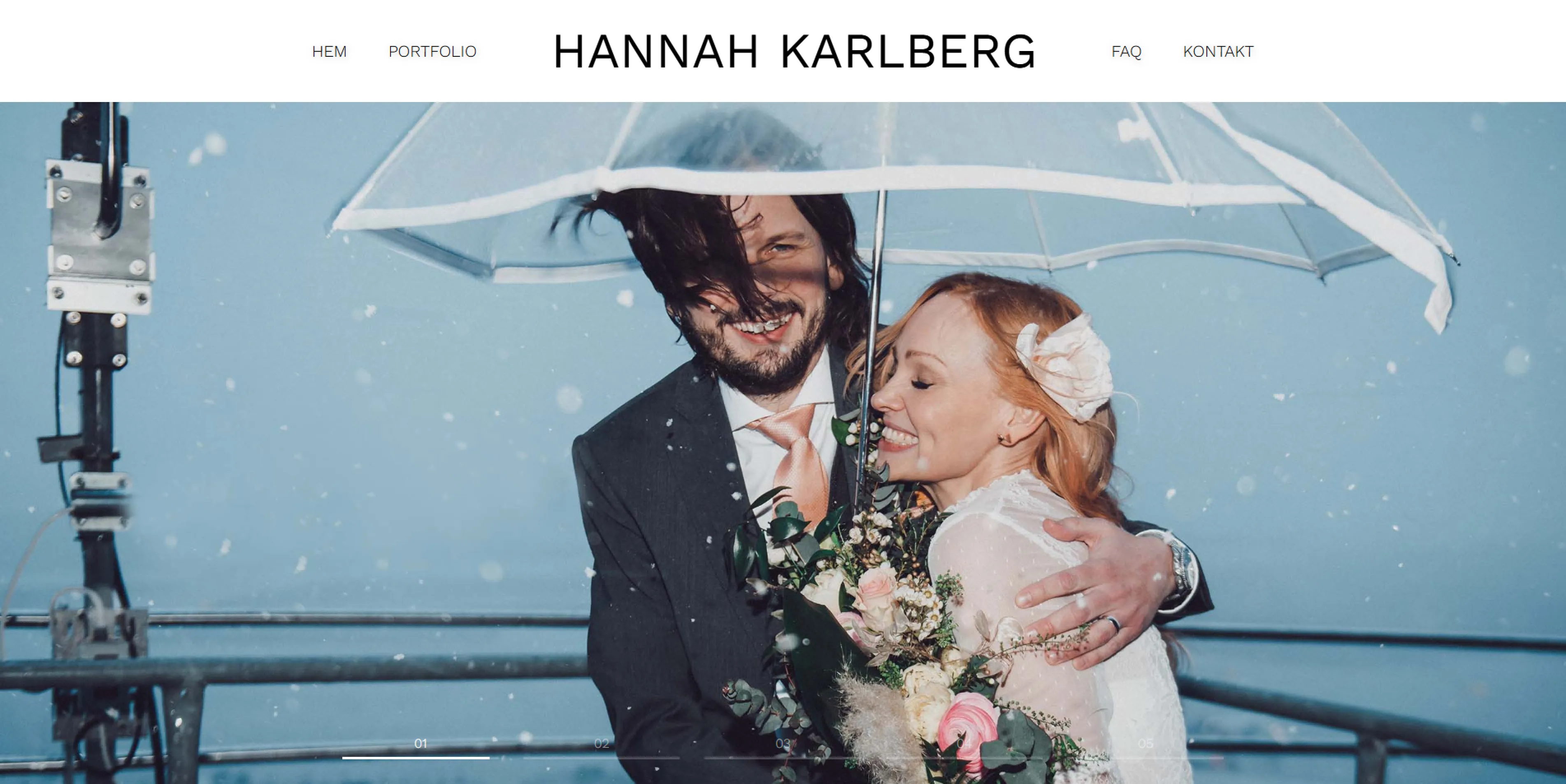
A friend of Vincent, a wedding photographer, initially crafted her website using WIX due to budget constraints. Despite her effort to create a visually appealing site by selecting a theme and adding her photographs, she was left with a sense of dissatisfaction regarding the overall presentation of her work. Recognizing her frustration, Vincent proposed reconstructing her website with Divhunt, promising a platform that would do justice to the quality of her images.
The goal was simple: they needed an easy-to-use builder that would empower clients to edit content without depending on a developer. In this case, it was essential for Vincent's friend to update content, add new photographs, categories, and more to the website without needing his help in the future. At the same time, the website's quality had to be top-notch in terms of both design and performance. And, since this is a presentation website, they also needed an affordable solution.
Journey before Divhunt
“In 2017, I embarked on my journey as a webmaster and designer, initially leveraging a comprehensive WordPress theme. Early on, I recognized the necessity for greater efficiency in my workflow. The quest to find a theme that not only offered the desired features but also compatibility with a wide array of plugins was challenging. Although I eventually identified a suitable solution, I frequently encountered limitations regarding the range of functionalities and customization options available through preset blocks or plugin settings. Furthermore, ensuring optimal website performance became a task in itself, especially when trying to avoid the inclusion of redundant code. This led to complications with caching plugins and errors during the minification of CSS and JavaScript files, complicating the determination of compatibility across various plugins. Even with a carefully curated tech stack, issues persisted, such as image carousels altering in size based on the orientation of included images—an issue not easily resolved through plugin settings alone. Additionally, empowering clients to independently update their sites—whether for cost savings or speed of content publication—introduced its own set of challenges. Granting access to users unfamiliar with design consistency often resulted in a mishmash of fonts and title styles within a single post, jeopardizing the site’s aesthetic coherence.”

Author
Vincent De La Rosée